
After a car accident, most people naturally focus on the damage they can see. A crushed bumper, dented fender, cracked headlight, or damaged hood immediately gets your attention. But some of the most important collision damage may be underneath the vehicle or hidden behind exterior panels.
Your vehicle’s structure plays an essential role in its alignment, handling, and overall safety. When an impact bends, shifts, or damages structural components, simply making the exterior look good again isn’t enough. The underlying damage needs to be identified and repaired correctly.
That is where professional car frame damage repair becomes important. At West Delray Collision Center, collision repairs can include computerized frame straightening and structural repairs designed to return damaged areas to factory specifications. The shop uses advanced laser-guided technology to identify alignment problems and restore structural integrity.
So, what actually happens when a vehicle’s frame is damaged, and how do professionals determine what needs to be repaired? Here’s what drivers should know.
What Does Frame Damage Actually Mean?
When people hear “frame damage,” they often picture a traditional truck frame that has been visibly bent in a major crash. Modern vehicle construction can be more complicated than that.
Depending on the vehicle, structural components may be part of a traditional full-frame design or incorporated into a unibody structure. In either case, collision forces can travel beyond the point where another vehicle or object made contact.
This means the bumper or quarter panel isn’t necessarily the only damaged area.
I-CAR explains that structural damage can sometimes be subtle enough that measuring is necessary to identify it. Exterior panels and trim can also conceal bends and other structural problems. That’s one reason a thorough post-accident inspection matters even when a vehicle doesn’t appear severely damaged from the outside.
If you’re concerned about structural damage after an accident, West Delray Collision Center’s collision repair services include damage assessment, structural repair, frame straightening, body panel work, painting, and other restoration services.
Signs Your Car May Have Structural Damage
Severe frame damage can sometimes be obvious, but other symptoms are surprisingly easy to overlook.
You might notice that your steering wheel no longer feels centered or that the vehicle seems to pull differently than it did before the collision. Doors, the hood, or the trunk may not open and close normally. Gaps between body panels may suddenly look uneven. Tires can also appear positioned differently within the wheel wells.
I-CAR identifies inconsistent or unusually wide gaps between body panels and differences in ride height as potential indicators of structural damage.
The important thing to remember is that these signs aren’t a do-it-yourself diagnosis. A vehicle may have hidden structural damage without giving you an obvious warning from the driver’s seat.
For that reason, if your car has taken a substantial hit, having it professionally inspected is much safer than assuming everything underneath is fine because the cosmetic damage looks minor.
Why Car Frame Damage Repair Matters
Your vehicle’s structure isn’t just there to hold body panels in place. It contributes to the way the vehicle is engineered to perform, including during a collision.
When structural dimensions are altered, other parts of the vehicle can be affected as well. Suspension mounting locations, body panels, doors, and other components all rely on correct positioning.
NHTSA has long recommended repairing, restoring, or replacing vehicle safety systems that may have been damaged in a crash, including airbags and sensors, seat belts, brakes, and other important systems. You can read more about NHTSA’s recommendations concerning post-crash safety systems.
A complete collision assessment, therefore, needs to look beyond making the car presentable again.
At West Delray Collision Center, the goal of structural repair is to restore frame alignment to factory dimensions. The facility says it uses computerized frame straightening and laser-guided alignment technology to improve accuracy during this process.
How Technicians Find Hidden Frame Damage
One of the most interesting parts of modern collision repair is how precisely a vehicle can be measured.
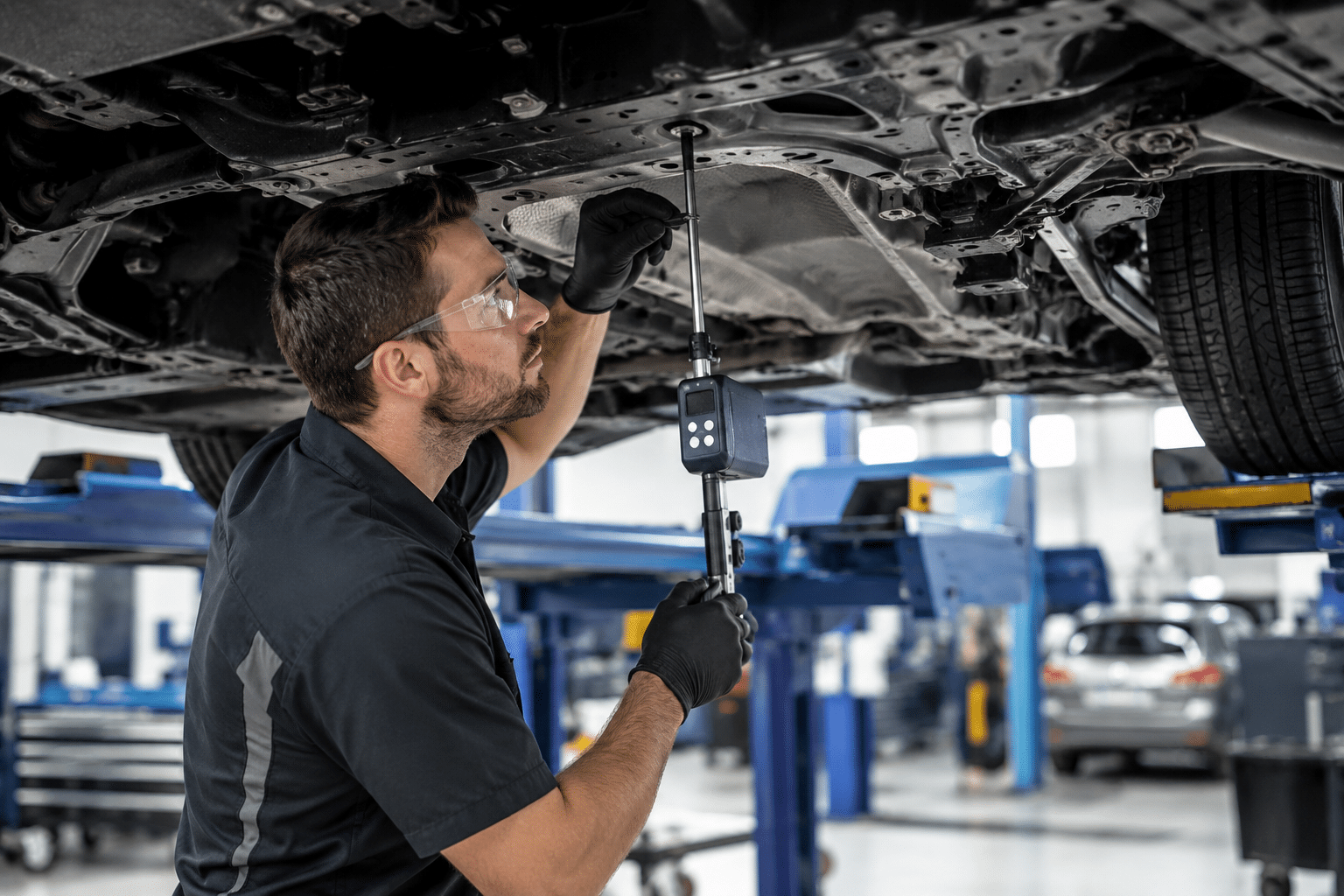
A trained technician begins by examining the visible damage and considering the direction and severity of the impact. From there, structural measuring equipment can be used to determine whether important points on the vehicle have moved from their specified positions.
This step matters because you can’t always judge structural alignment by eye.
I-CAR notes that three-dimensional measuring can help technicians assess damage accurately and document measurements before and after straightening. It can also uncover structural issues that aren’t immediately apparent.
West Delray Collision Center uses a state-of-the-art laser frame measuring system along with multiple frame straightening machines at its Delray Beach facility.
Think of it as comparing where important structural points are now with where the manufacturer intended them to be. Those measurements help technicians develop the appropriate repair plan.
What Happens During Computerized Frame Straightening?
Once structural damage has been identified, technicians can determine how the damaged components should be repaired according to the vehicle’s requirements and applicable manufacturer procedures.
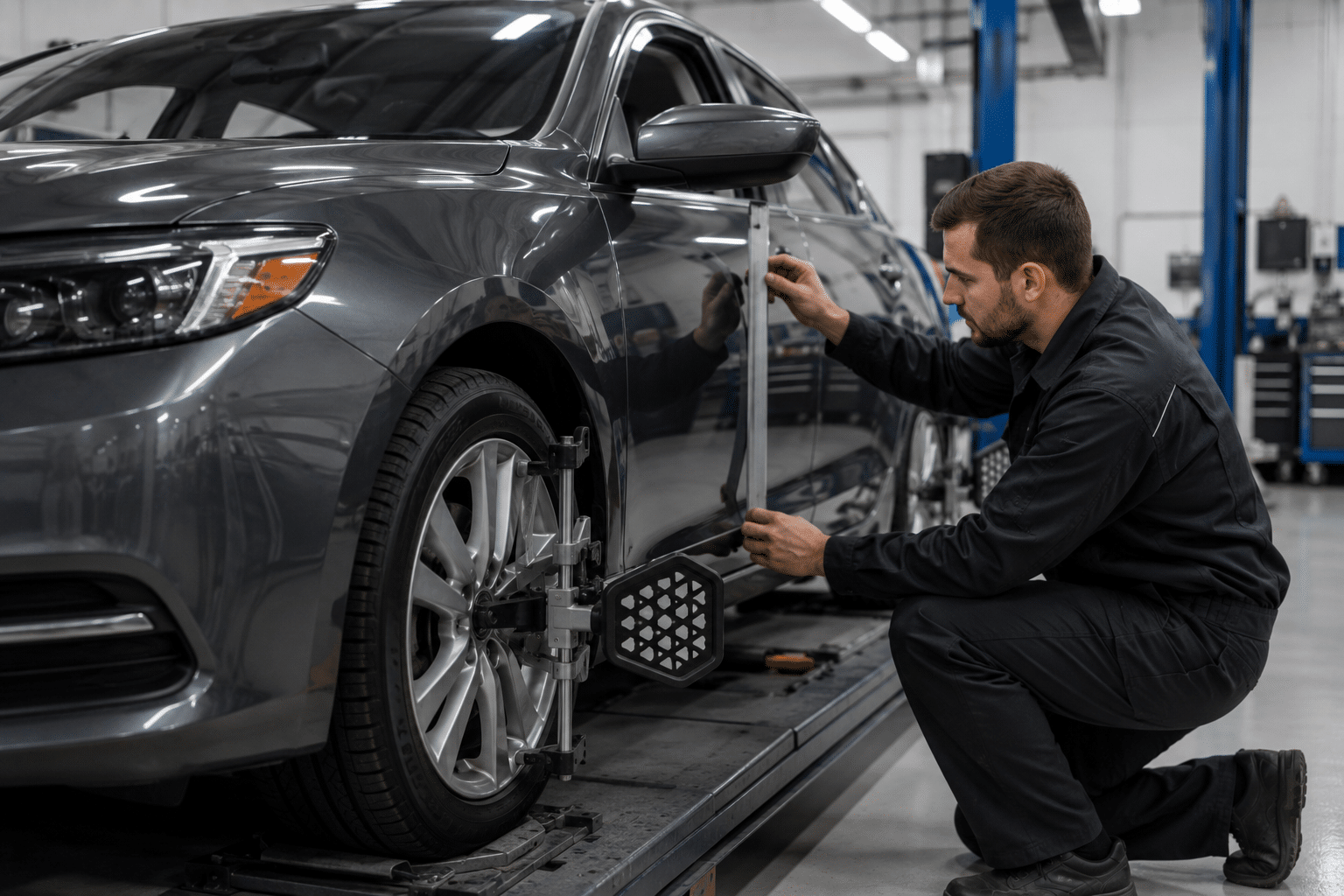
The vehicle may be secured to specialized frame equipment so controlled force can be applied to the affected areas. Measurements are taken throughout the process rather than simply pulling the structure until it “looks straight.”
That’s a crucial distinction.
Modern structural repair depends on precision. I-CAR emphasizes the importance of measuring, anchoring, and pulling as interconnected steps and recommends consulting OEM repair information because today’s vehicles use increasingly complex materials and construction methods.
West Delray Collision Center’s complete auto body services include computerized frame straightening using laser-guided alignment technology. The objective is to return the structure to its original dimensions while restoring alignment, drivability, and structural integrity.
After structural work is complete, additional collision repairs can continue, including panel replacement, dent repair, refinishing, reassembly, and final quality checks.
Can Every Damaged Frame Simply Be Straightened?
Not necessarily.
Every collision is different, and the appropriate repair depends on the vehicle, the location and severity of the damage, the materials involved, and manufacturer repair procedures.
Some structural components may be repairable, while others may require replacement. Modern vehicles can contain combinations of high-strength steels, aluminum, and other materials, each with specific repair requirements.
That’s especially relevant with aluminum vehicles. Aluminum doesn’t behave exactly like conventional steel when damaged. West Delray Collision Center explains that aluminum can crack, stretch, or weaken when incorrect techniques are used, which is why specialized tools and training are required. Its aluminum body repair services include computerized alignment, specialized welding and bonding techniques, and manufacturer-approved materials.
A qualified repair facility should therefore evaluate the specific vehicle rather than assuming the same repair technique works for every damaged structure.
What Else Should Be Checked After Frame Damage?
Structural damage rarely exists in isolation. A strong enough impact to move part of a vehicle’s structure can affect neighboring components and systems.
Suspension components and mounting points may need attention. Wheels and alignment can be affected. Body panels might no longer fit correctly. Sensors and other safety-related systems may also require inspection depending on the collision.
I-CAR’s collision repair guidance notes that measuring for damage analysis can help identify suspension damage in addition to hidden and indirect structural damage.
This is why a comprehensive inspection is more valuable than concentrating only on the most noticeable dent.
A properly planned car frame damage repair should account for the entire affected area so that the repair addresses the consequences of the collision, not simply its most visible evidence.
How West Delray Collision Center Handles Collision Repairs
For drivers, dealing with an accident can already be stressful enough without trying to understand every technical step happening at the repair shop.
West Delray Collision Center follows a structured process beginning with an assessment and repair estimate. Certified technicians then complete necessary structural and body repairs using equipment such as computerized frame straightening and computerized color matching systems. The vehicle is reassembled and goes through a quality inspection before delivery.
The shop states that its technicians are I-CAR certified and that it works on all makes and models, including luxury, electric, and hybrid vehicles. West Delray also offers insurance claims assistance, onsite rentals, and 24/7 towing as part of its collision repair support. Repairs are backed by a lifetime warranty.
Those additional services can make a significant difference when your vehicle isn’t drivable or you’re trying to coordinate repairs with an insurance company.
How Long Does Frame Damage Repair Take?
There isn’t one timeline that applies to every damaged vehicle.
West Delray Collision Center says most collision repairs average approximately five to seven days, but actual repair time depends on the extent of the damage. A more accurate timeline is provided after the initial assessment.
Structural repairs may require additional steps compared with a minor cosmetic repair. Technicians first need to identify the complete damage, obtain necessary parts, perform structural work, complete related body and paint repairs, reassemble the vehicle, and conduct final inspections.
For a vehicle with significant collision damage, taking the time to perform each stage correctly matters far more than rushing through the repair.
Don’t Ignore Possible Frame Damage After an Accident
It’s easy to look at a damaged bumper and assume that’s the full story. Collision forces, however, can travel through a vehicle and cause structural damage beyond the immediate impact area.
If something about your vehicle feels different after an accident, or if the collision was significant enough that structural damage may have occurred, a professional inspection can provide a much clearer answer.
Proper car frame damage repair begins with accurate measurement and a complete understanding of what the collision affected. From there, trained technicians can determine the appropriate repairs and work toward restoring the vehicle’s alignment, appearance, drivability, and structural integrity.
Schedule Your Collision Repair Assessment
If your vehicle has been involved in an accident, contact West Delray Collision Center for a professional damage assessment. The team serves Delray Beach and Palm Beach County with certified collision repair, computerized frame straightening, insurance claims assistance, towing, and onsite rental options.
Call West Delray Collision Center at (561) 638-8300 or request a free estimate to get started.
